
PCB Assembly Services
SMT assembly, mixed SMT and through-hole assembly, manual soldering and final workmanship review can be coordinated to match the board and build stage.

Excel Circuit provides in-house SMT assembly services for prototype, pilot and low-volume PCBA projects that require controlled material handling, automated placement, reflow and inspection.
Assembly capability
Excel Circuit operates its own SMT assembly capability to support engineering prototypes, low-volume builds and production PCBA projects. Our team coordinates component preparation, assembly, inspection and testing with direct engineering feedback when assembly issues arise.
SMT assembly, mixed SMT and through-hole assembly, manual soldering and final workmanship review can be coordinated to match the board and build stage.
We support first engineering builds, design revisions, low-volume requirements and repeat production without making unsupported volume or lead-time guarantees.
Assembly findings can be reviewed with our PCB and hardware engineers to address footprints, polarity, solderability and manufacturability.
Production-floor views
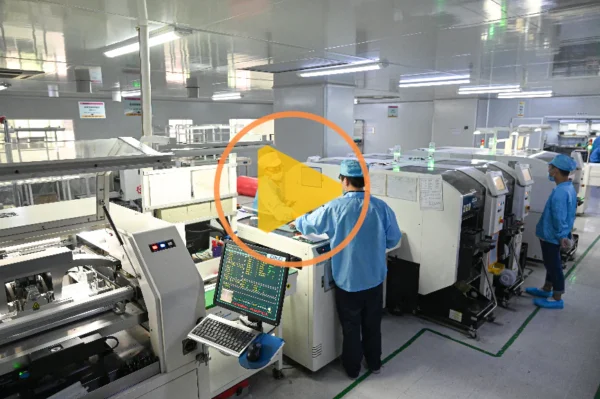
Existing production-floor images from the Excel Circuit website show the SMT line, component handling area and PCBA visual inspection workstation.


Controlled workflow
Each project is reviewed against the available production data and its specific inspection and testing requirements. See the representative Bluetooth audio PCBA workflow. This engineering example illustrates a proposed workflow; it is not a completed-build or test report.
Process and inspection
Solder paste is applied through the project stencil before component placement.
Solder paste inspection checks paste deposition before placement when SPI is specified for the build.
Automated component placement follows approved centroid data, BOM information and component orientation requirements.
Placed assemblies pass through a controlled reflow process appropriate to the assembly requirements.
Automated optical inspection supports checks of placement, polarity, orientation and visible solder-joint conditions after assembly.
X-ray inspection can support evaluation of hidden solder joints such as BGA assembly and QFN connections when required.
Through-hole insertion, manual assembly and hand soldering can be integrated where the board requires mixed technology.
Testing is performed according to the agreed project scope and available test requirements, followed by final inspection.
Quality control
Quality controls are selected around the board technology, component package, design risk and agreed project scope.
Responsive problem solving
When assembly issues are identified during prototype or production builds, our engineering team can review PCB layout, component selection, footprints, polarity, solderability and manufacturability requirements to support corrective action.
PCB design feedback and footprint review can help identify placement, polarity and solderability risks.
Component data and assembly requirements can be checked before build release to reduce avoidable production questions.
Prototype findings can be communicated back to the engineering team for practical issue review and revision planning.
Integrated project support
Component sourcing can be integrated with our in-house SMT assembly workflow, helping coordinate BOM requirements, component preparation, assembly scheduling and production delivery.
Fabrication coordination
Excel Circuit can coordinate PCB fabrication together with component sourcing and in-house SMT assembly for complete PCBA project support.
Closer project control
Closer control of assembly scheduling, production coordination and inspection.
Assembly issues can be communicated directly with the engineering team.
AOI, X-ray and other inspection requirements can be integrated into the assembly workflow.
Better coordination for engineering builds, revisions and small-volume production.
PCB design, sourcing, assembly and testing can be coordinated through one project workflow.
Prepare your RFQ
Send the available project data so our team can review assembly, sourcing, inspection and testing requirements.
If some production files are not ready, our engineering team can review the available project data first.
Purchasing FAQ
Practical answers about files, schedule, engineering support, production coordination and confidentiality.
For SMT Assembly Services, send Gerber or ODB++ data, BOM with manufacturer part numbers, pick-and-place or centroid file, assembly drawings, approved substitutions, quantity, programming files, and inspection or functional-test requirements.
Lead time depends on design maturity, complexity, quantity, material or component availability, testing scope, and how quickly engineering questions are resolved. We confirm the schedule after reviewing your files; urgent prototype or quick-turn options can be discussed where the required process and materials permit.
Gerber and ODB++ are the preferred neutral production formats. If your source data is in a native EDA tool, tell us the software and version; we will confirm compatibility or ask for a controlled Gerber/ODB++ export, drill data, drawings and other release files.
Yes. We can work from an existing design, production package or previous revision. We first check completeness, revision control and the requested scope, then identify any missing data, manufacturability risks or changes that need your approval before work begins.
Yes, SI/PI analysis can be coordinated when manufacturing or assembly risk depends on controlled impedance, return paths or power integrity. It is a separate engineering scope and requires suitable design data, stackup information, models and acceptance criteria.
Yes. Excel Circuit can coordinate fabrication, component sourcing, PCB assembly, inspection, testing and related box-build work as one project. The quotation states which stages are included, which materials are consigned, and the approvals needed before production.
Project files are limited to personnel and qualified partners who need them for quotation and delivery. Excel Circuit uses reasonable technical and organizational safeguards, does not publish customer designs without permission, and can work under a mutually agreed NDA. Your signed NDA or project agreement controls where it provides specific protections.
Final scope, price and lead time are confirmed after engineering review of your current files and requirements.