Contents
A ceramic PCB uses an electrically insulating ceramic substrate—commonly alumina or aluminum nitride—to support conductive circuitry while transferring heat and maintaining dimensional stability. Ceramic substrates are selected when thermal, electrical, mechanical, or environmental requirements exceed what a conventional organic laminate can provide.
Which Ceramic Materials Are Used?
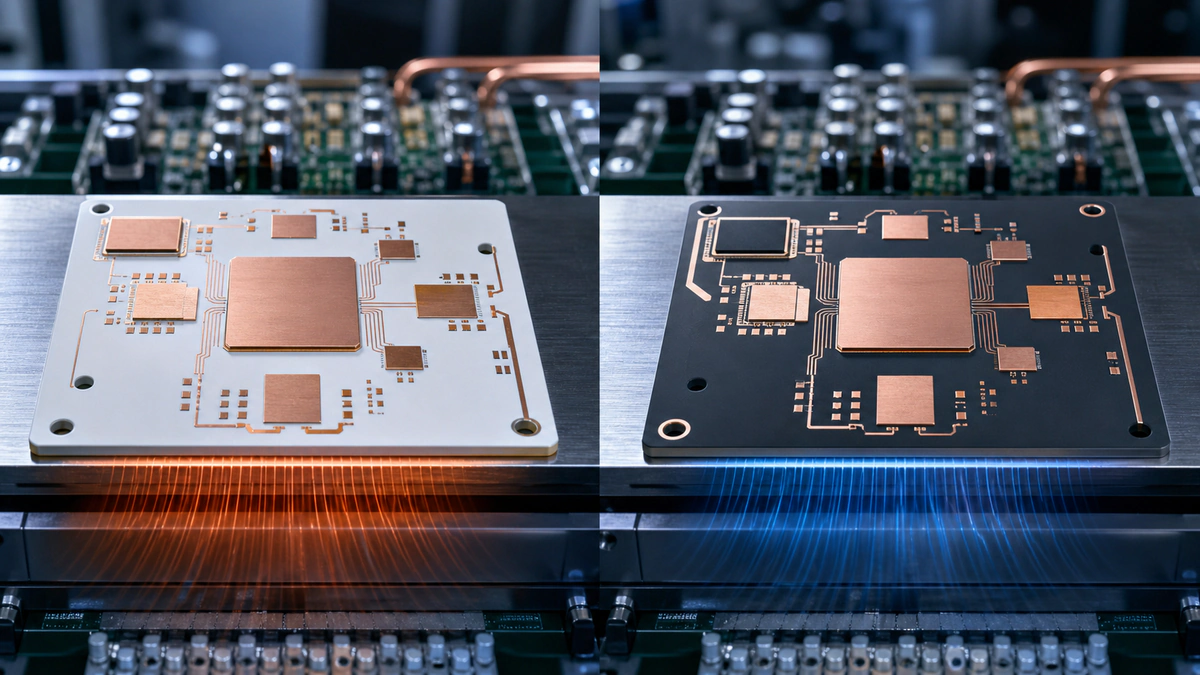
Alumina (Al₂O₃) is widely used because it balances insulation, mechanical stability, availability, and cost. Aluminum nitride (AlN) provides higher thermal conductivity but requires tighter material and process control. Material grade, thickness, metallization system, and supplier data determine the usable properties; one headline value should not be treated as universal.
Ceramic PCB vs FR-4
FR-4 is an organic glass-reinforced laminate used for a broad range of multilayer boards. Ceramic substrates generally provide higher thermal conductivity, lower moisture absorption, and different thermal expansion behavior, but they are more brittle and use different imaging, metallization, drilling, and handling processes.
Why Are Ceramic PCBs More Expensive?
Cost is driven by ceramic material, substrate thickness, panel utilization, metallization method, layer construction, copper thickness, feature size, via technology, surface finish, inspection, and expected yield. AlN typically costs more than common alumina, while complex multilayer or thick-copper constructions add further process steps.
Thermal Design Considerations
Thermal performance depends on the complete heat path: component interface, copper geometry, substrate, attachment method, heat spreader, enclosure, and airflow. A high-conductivity substrate cannot compensate for a poor component interface or restricted heat rejection.
Typical Applications
Ceramic circuits are used in power modules, high-brightness LED assemblies, RF and microwave hardware, sensors, automotive electronics, and other systems requiring heat transfer or stable electrical behavior. Selection should follow quantified temperature, voltage, frequency, environment, reliability, and volume requirements.
Data Required for a Quote
Provide dimensions, material preference, layer count, copper thickness, minimum features, hole and via requirements, surface finish, thermal target, operating environment, quantities, and drawings. Excel Circuit can coordinate these requirements through PCB manufacturing services.