Contents
Consigned PCB assembly means the customer supplies some or all components or materials to the assembler. Turnkey PCB assembly means the PCBA supplier manages component procurement and typically coordinates PCB fabrication as well as assembly. A partial-turnkey or hybrid model splits purchasing responsibility by material or BOM line.
No model is universally better. The right choice depends on available inventory, BOM complexity, sourcing capability, special components, documentation requirements, schedule and the level of responsibility the customer wants the supplier to manage.
| Factor | Consigned PCBA | Turnkey PCBA |
|---|---|---|
| Component purchasing | Customer | Supplier |
| BOM sourcing work | Customer | Supplier |
| Material traceability responsibility | Shared / customer-heavy | Supplier-managed per agreement |
| Excess material ownership | Customer / project dependent | Commercial agreement dependent |
| Schedule coordination | More customer coordination | More centralized |
| Alternate approval | Customer controlled | Supplier proposes / customer approves |
| Inventory burden | Higher customer involvement | More supplier-managed |
| Best fit | Customer-controlled or special parts | Integrated procurement and assembly |
What is consigned PCB assembly?
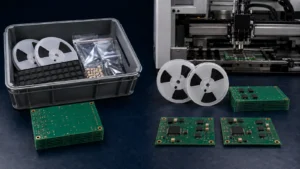
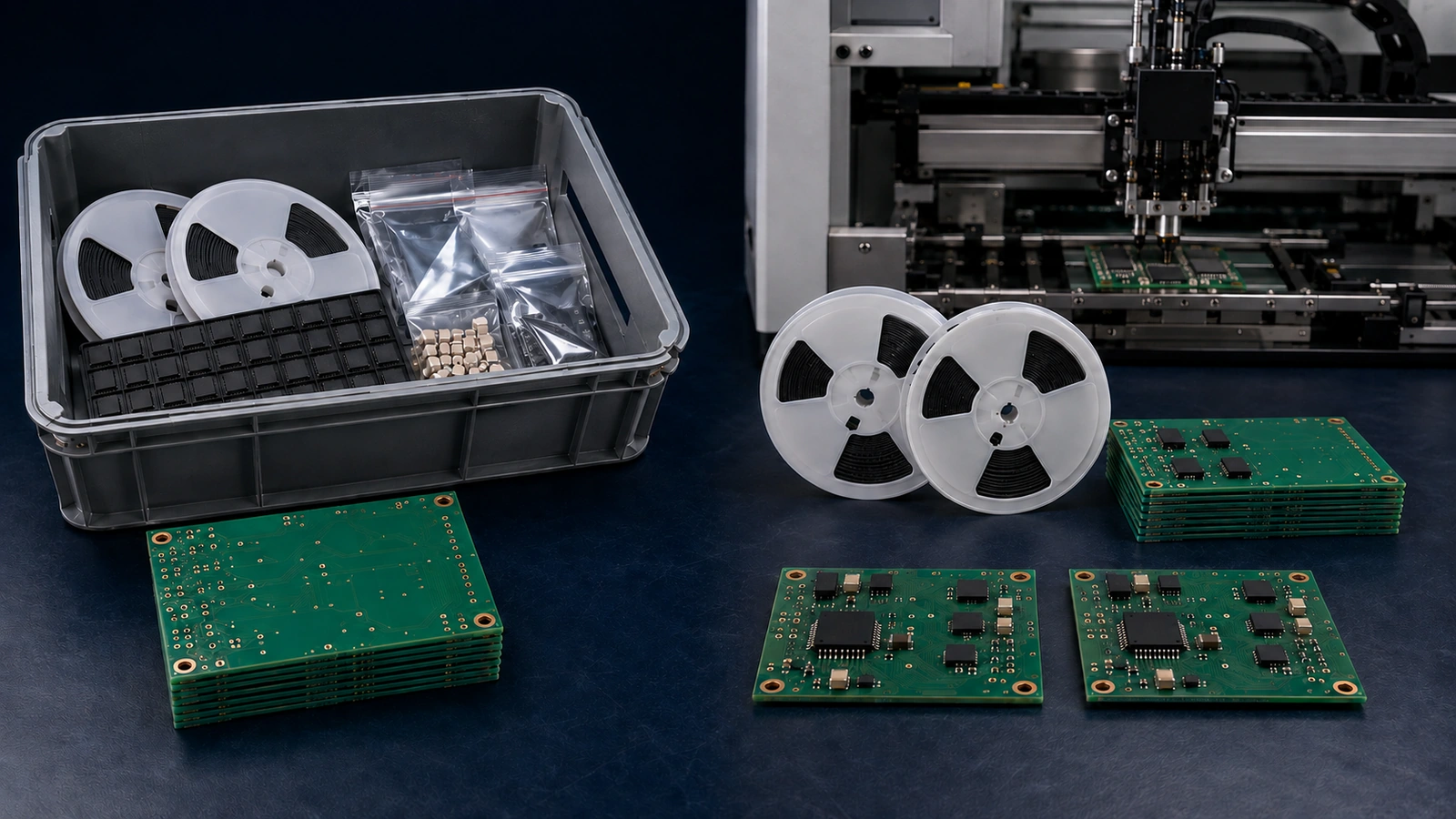
Consigned PCB assembly is a manufacturing model in which the customer supplies some or all production material to the assembler. The scope may include assembly only, or the customer may consign components while the assembler procures bare PCBs and other items. In some arrangements, bare PCBs are also customer supplied.
Responsibility remains mixed. The customer normally owns component selection, purchasing and the condition of supplied material, while the assembler verifies receipt, reports discrepancies, controls material during its process and performs the agreed assembly work. The quotation and purchase agreement should state who owns shortages, replacements, excess and unusable material.
What is turnkey PCB assembly?
Turnkey PCB assembly is a model in which the PCBA supplier coordinates component procurement, PCB fabrication, assembly and the agreed inspection or testing scope. The customer still owns design intent and approval decisions; “turnkey” does not authorize engineering changes without review.
The turnkey PCB assembly process explains the wider sequence from BOM and Gerber review through shipment. This article focuses only on who purchases and manages material.
What is partial-turnkey or hybrid PCB assembly?
A hybrid model assigns selected parts to the customer and the remaining BOM to the PCBA supplier. A customer might provide a programmed MCU, FPGA, custom display, obsolete device or expensive IC already held in inventory while the supplier buys standard passives and production materials.
Hybrid work can preserve control over special parts without forcing the customer to kit every line. It needs a line-by-line responsibility matrix: customer supplied, supplier purchased, do-not-install or otherwise restricted. Ambiguous responsibility is a common cause of duplicate purchases and shortages.
How does the cost structure differ?
Consigned material removes those purchase lines from the assembler’s procurement scope, but it does not make the material free. The customer carries purchasing labor, supplier communication, inbound freight, excess inventory, kitting, shortage recovery and the financial effect of unusable material.
Turnkey pricing includes supplier sourcing, procurement coordination and consolidated material handling according to the commercial agreement. It may also reflect MOQ, packaging and inventory exposure. Compare total project responsibility rather than component unit prices alone. The PCBA cost breakdown covers the wider cost structure; no purchasing model guarantees a fixed percentage saving.
How do lead-time considerations differ?
A consigned build can start only when the required customer-supplied materials and production data arrive in usable condition. Parts may come from several locations, so one late shipment or quantity shortage can delay kitting even if the other items are ready.
A turnkey model centralizes procurement planning with the supplier, but it cannot eliminate factory lead times, allocation or approval delays. Both models need a required-on-site date, confirmed quantities and a rule for escalating constrained items. Do not equate a supplier quote with reserved inventory.
Use a material-readiness gate rather than assuming the assembly start from a purchase-order date. The gate should identify received consigned items, confirmed turnkey orders, open shortages, approval deadlines and the last acceptable arrival date. This separates a commercial target from a production-ready kit and shows which party owns each recovery action.
Which model handles component availability risk better?
Consignment gives a customer direct control when it has established supplier relationships, inventory or internal sourcing expertise. Turnkey procurement can centralize availability review across the BOM and coordinate purchasing with assembly dates.
The better path depends on actual access and responsibility. A customer-held part may cover one build but not recurring production; a supplier-proposed source still needs approval and confirmation. Use a BOM risk analysis to separate lifecycle, lead-time, single-source and quantity exposure from the purchasing-model decision.
How does traceability work in each model?
Traceability responsibility follows the material path and the agreement. Customer-supplied parts should arrive with the required purchase, supplier, lot, date-code and packaging records. Supplier-purchased material should be controlled under the agreed sourcing and receiving process.
Neither model creates complete traceability automatically. Define which records accompany incoming material, how lots are associated with a production batch and what will be retained. The component traceability guide explains provenance and risk-based inspection.
Who approves alternate components?
The customer or designated engineering authority should approve alternates in both models. In a consigned build, the customer typically makes the purchasing choice before shipment. In a turnkey build, the PCBA supplier may identify and propose a candidate, but the proposal is not authorization to substitute.
The alternate-component guide covers technical validation. The AVL vs BOM guide records which manufacturer options and sources are approved for a defined release. A quote should distinguish an approved option from a pending suggestion.
Who owns excess material and attrition?
Excess ownership is a commercial term, not a universal feature of either model. MOQ, full reels, setup requirements, process losses, spares and order multiples can leave material after the build. The agreement should define whether material is returned, stored for repeat orders, transferred or charged.
Attrition allowance depends on package, quantity, handling, equipment and project risk. Avoid applying an invented universal percentage. Instead, agree on quantities and disposition for each exceptional or high-value item before purchasing or shipping.
What makes a good consigned kit?
A good kit has verified quantities, clear labels, complete MPNs, lot separation where required and packaging that protects the component and supports machine feeding. The packing list should map containers to BOM lines and identify customer inventory ownership.
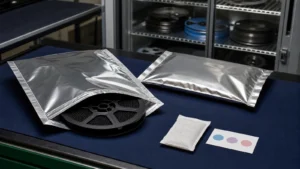
Damaged reels, loose parts, mixed MPNs, cut tape without orientation, unknown partial quantities and moisture-sensitive parts with uncertain exposure create work and risk. Customer-supplied material should not be assumed usable from appearance alone. The MSL handling guide covers moisture status, dry pack and exposure records.
Receiving should reconcile the packing list against the responsibility matrix before production is committed. Record received quantity, usable quantity, discrepancy, lot identity and disposition. A box marked “complete kit” is not sufficient evidence that every BOM line, setup quantity and feeder-compatible package is ready.
Define a shortage path in advance. The customer may send additional stock, authorize supplier purchase for that line, approve a packaging change or move the build date. None of these actions should happen implicitly, especially when a shortage affects an approved manufacturer or traceability requirement.
When can consignment fit a prototype?
Consignment can fit a prototype when an engineering team already owns the critical ICs, needs to retain direct control of a special component or is testing a rapidly changing design. Supplying a small number of unique items may avoid repurchasing existing stock.
It is not automatically faster. Time spent counting, labeling, repacking and coordinating shortages can offset an apparent advantage. The prototype-versus-production guide explains how evidence and controls should mature with build stage.
Why can turnkey become attractive for production?
Turnkey procurement can become attractive for repeat production because one party coordinates sourcing, material arrivals, kitting and assembly scheduling. It can also make BOM-level risk and purchase status easier to review in one production plan.
That benefit depends on clear forecasts, approved sources, quote validity and decision response. Turnkey is not universally better: proprietary supply agreements, customer-controlled inventory or regulated purchasing rules may keep selected parts consigned.
When does consigned PCBA make sense?
- The customer already owns suitable, documented inventory.
- Special, programmed, custom or controlled parts must remain customer managed.
- The customer has stronger access to a constrained or proprietary source.
- Commercial or quality rules require direct purchasing.
- A small hybrid scope can isolate exceptional parts without consigning the whole BOM.
These criteria indicate possible fit, not automatic acceptance. The assembler still needs enough information to receive, store, stage and place the material safely.
When does turnkey PCBA make sense?
- The customer wants one coordinated procurement and assembly scope.
- The BOM contains many standard lines that are inefficient to kit internally.
- Recurring production needs centralized material planning.
- The project benefits from supplier-led availability review and shortage reporting.
- The customer can provide forecasts and respond to alternate or source approvals.
Excel Circuit’s turnkey PCBA service combines component sourcing, qualified PCB manufacturing resources and in-house SMT assembly around an approved production package.
Consigned vs turnkey decision matrix
| Project condition | Consigned indication | Turnkey indication | Hybrid question |
|---|---|---|---|
| BOM complexity | Few controlled items | Many procurement lines | Can special lines be separated? |
| Existing inventory | Customer stock available | No reusable stock | Which lots are suitable? |
| Sourcing expertise | Customer-led | Supplier-led | Who has access by line? |
| Traceability | Customer records supplied | Supplier records agreed | How will records join? |
| Production frequency | One-off or controlled stock | Recurring planning | Who holds leftovers? |
| Schedule | All material ready | Central coordination preferred | Which item controls start? |
| Alternate control | Customer purchases approved part | Supplier proposes; customer approves | Is the AVL released? |
| Procurement workload | Customer accepts it | Customer wants it managed | Can standard parts be turnkey? |
Document the chosen model in a responsibility matrix. For every BOM line, name the purchasing party, planned quantity, source restrictions, approval status, delivery date and excess disposition. That record is more useful than applying one label to a mixed project.
Review the matrix again when build quantity or revision changes. A part consigned for a prototype may move to turnkey procurement for production, while a newly programmed device may move in the opposite direction. The model can change by phase, but each released build needs one unambiguous baseline.
Information required from the customer
Provide the BOM, build quantity, target schedule and a list of customer-supplied parts. Include existing inventory quantities and condition, approved alternates, sourcing restrictions, required lot/date-code records, traceability expectations and test requirements.
For consigned or hybrid material, identify container quantities, packaging condition, handling history and the date material can arrive. For turnkey lines, identify the approval path for proposed sources or alternates.
Choose the purchasing model before quotation
Send your BOM, build quantity and list of customer-supplied parts if you need the consigned, hybrid or turnkey assembly model reviewed before quotation. A line-level responsibility plan makes cost, schedule and material assumptions visible before assembly begins.