Contents
Some plastic-packaged semiconductor components absorb moisture from the environment. During reflow, rapid heating can turn trapped moisture into vapor, increase internal stress and contribute to delamination, package cracking, interfacial damage or “popcorning.” Moisture sensitivity level (MSL) defines how sensitive a package is to exposure after controlled dry packaging is opened.
Not every component has the same moisture sensitivity. Production teams should verify the manufacturer’s marking and applicable requirements, preserve dry-pack information, track exposure and use an approved drying or bake process only when it is required. A generic temperature-and-time recipe is not safe for every component, tray, reel or package.
| Concept | What it means | Why it matters |
|---|---|---|
| MSL | Moisture sensitivity classification | Determines handling controls |
| Dry pack | Moisture-controlled packaging | Protects before opening |
| MBB | Moisture barrier bag | Limits moisture exposure |
| Desiccant | Controls moisture in packaging | Supports dry storage |
| HIC | Humidity indicator card | Indicates package humidity exposure |
| Floor life | Allowed exposure after opening | Controls assembly timing |
| Baking | Moisture removal process | May restore handling condition when appropriate |
What is moisture sensitivity level?
Moisture sensitivity level is a handling classification for nonhermetic solid-state packages that can absorb moisture and be damaged during reflow if exposure is not controlled. The classification helps manufacturing teams determine how dry-packed material should be opened, exposed, stored and prepared for assembly.
MSL applies to the component package, not the entire electronic design. Verify the exact manufacturer part number and package because related devices or package options can have different requirements. Follow current manufacturer information and the applicable revision of relevant industry requirements rather than assuming from package appearance.
Why does moisture become a reflow problem?
Absorbed moisture becomes a reflow concern because the package heats rapidly. Moisture can vaporize and create pressure at internal interfaces while materials expand at different rates. If the resulting stress exceeds the package’s capability, internal separation or cracking can occur.
The risk depends on package construction, absorbed moisture, reflow exposure and material condition. Room-temperature storage by itself does not reproduce reflow stress, which is why a part may look acceptable before soldering yet still require controlled handling.
What is component popcorning?
Popcorning is package damage associated with moisture-driven stress during rapid heating. It can include cracking, bulging or internal delamination. The name describes the failure mechanism; it should not be used to imply that every event is loud or externally obvious.
Internal damage may not be visible in a basic receiving inspection. Prevention therefore depends on material status and exposure control, not only on finding visible defects after reflow.
What do MSL labels and dry packaging show?
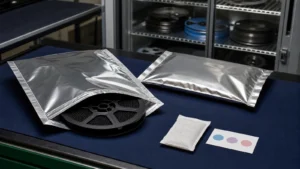
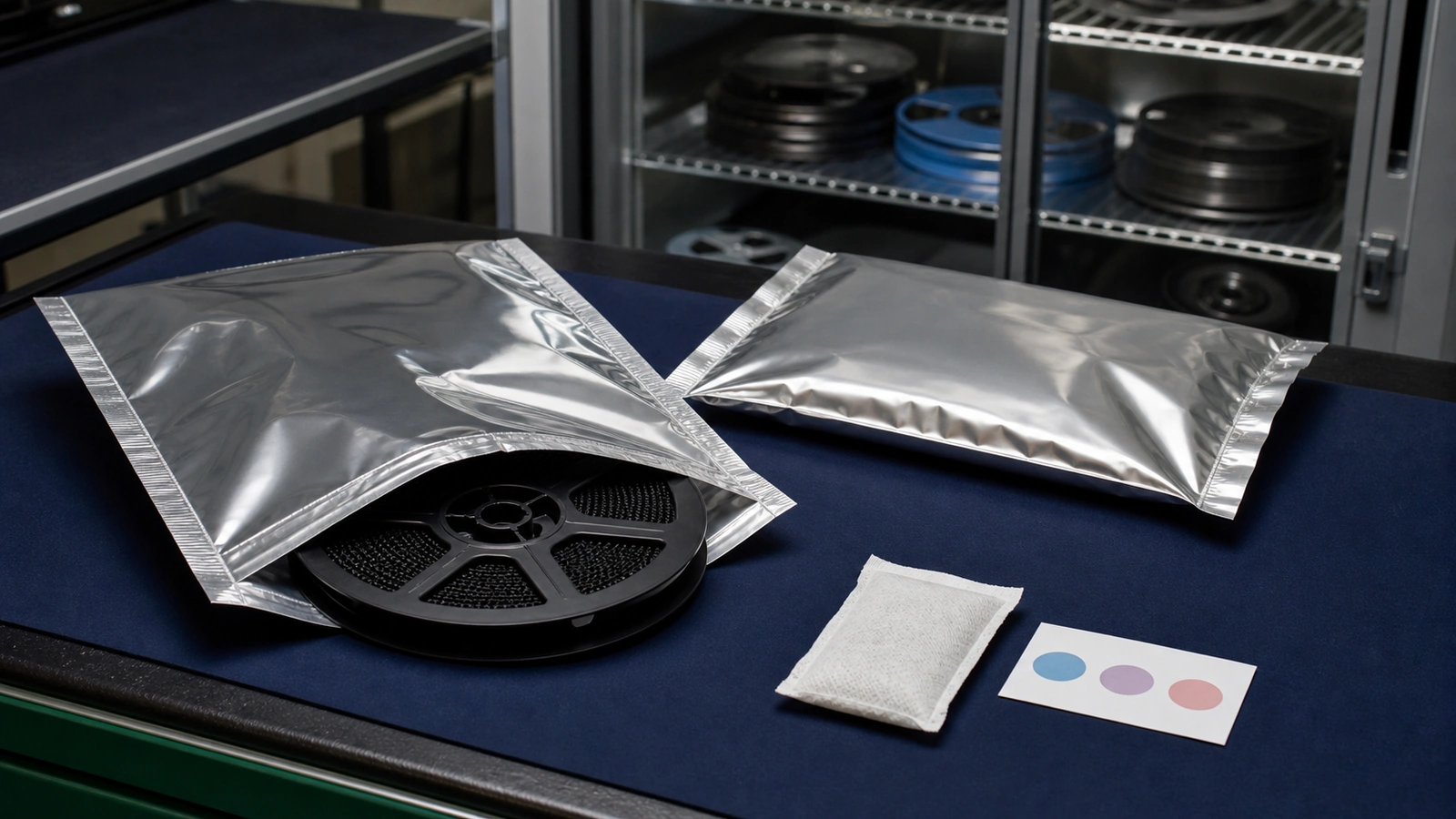
MSL packaging commonly communicates the part identity, sensitivity information and handling status. A moisture barrier bag (MBB) limits moisture ingress, desiccant supports the dry environment, and a humidity indicator card (HIC) provides an indication of humidity exposure inside the package.
Packaging and labels vary among manufacturers and suppliers. Verify the exact instructions, seal condition, desiccant and HIC rather than expecting one universal layout. An intact-looking bag does not independently prove part authenticity or complete handling history.
What is floor life?
Floor life is the permitted exposure period under defined environmental conditions after controlled dry packaging is opened. The applicable duration depends on the component’s MSL classification and the governing manufacturer or process requirements.
Production should record when material is opened, the exposure conditions or controlled-storage intervals, and when it is returned to an approved dry environment. Do not restart the clock merely by resealing a bag. This guide deliberately does not reproduce proprietary standard tables; teams should consult current manufacturer documentation and applicable JEDEC requirements for exact limits.
How should moisture-sensitive components be stored before assembly?
Unopened material should remain in its required sealed dry pack and be protected from damage. After opening, material may need controlled dry storage, exposure tracking or both. Preserve the component identity, lot, packaging status and exposure record whenever a reel, tray or tube moves between receiving, storage and the production line.
The correct dry-cabinet or packaging condition depends on the approved process and component requirements. This article does not invent a universal humidity setpoint. Use monitored equipment, defined responsibilities and a method that prevents untracked partial reels from re-entering stock.
When may component baking be required?
Baking or another approved drying process may be required when floor life has been exceeded, a dry pack is compromised, storage history is uncertain or the manufacturer specifically instructs it. The decision should use part identity, package, exposure history, carrier limitations and the applicable procedure.
Follow the component manufacturer’s recommendation, applicable JEDEC requirements and the facility’s controlled process for exact conditions. A bake decision is not a substitute for identifying why exposure became uncontrolled.
For a package-specific example, NXP’s flip-chip BGA and chip-scale package guidance directs users to the moisture-sensitivity caution label and applicable industry requirements. Use such manufacturer guidance for the actual package instead of copying its values to unrelated components.
Consider two partial reels of the same MPN. One has a sealed return bag, current exposure log and controlled-storage record; the other has only a handwritten label and unknown opening history. Their part numbers match, but their readiness evidence does not. The second reel should be held for a documented disposition rather than assigned the first reel’s status.
Why can improper baking create new risks?
Improper baking can damage packaging or reduce material usability. Trays, reels, tubes and labels may have temperature limits different from the component. Heat exposure can deform carriers, affect tapes or labels and complicate automated feeding.
Excessive or incorrectly controlled heat can also contribute to terminal oxidation or solderability concerns. Repeated bake cycles and transfers create handling and traceability risk. “Just bake it” is therefore not a harmless default: verify the permitted carrier, duration, temperature, atmosphere and post-bake storage under the approved process.
How does MSL apply to BGA and QFN components?
BGA, QFN and other plastic packages often receive close moisture-control attention because hidden joints, internal interfaces and thermal mass can make prevention and process discipline important. However, package family alone does not establish one MSL rating.
Check the specific device and package. The BGA voiding guide owns solder-joint voiding and acceptance topics, while the QFN assembly guide covers thermal pads, vias and stencil design. Moisture status is an incoming-material and staging control, not a replacement for those assembly controls.
How does component sourcing affect MSL control?
Sourcing records should preserve the exact MPN, package condition, lot or date code, original dry pack where available and relevant storage or exposure history. If a bag has been opened or repacked, the receiving team needs enough evidence to determine the next controlled action.
The component traceability guide explains supplier, lot and receiving records. Those records support an MSL decision, but paperwork or dry packaging alone does not prove authenticity or reflow readiness in every case.
What should accompany customer-consigned components?
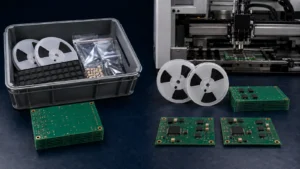
Customer-consigned moisture-sensitive components should arrive with clear part identification, intact required packaging, known handling history and an explicit moisture status. The packing list should distinguish sealed material from opened partial reels or trays and identify any prior drying treatment.
Appearance alone cannot guarantee usability. The consigned-versus-turnkey assembly guide explains how material responsibility should be assigned; for MSL items, the agreement should state who provides exposure records, who decides on drying and who accepts any resulting schedule impact.
Why do prototype builds still need MSL control?
Prototype quantities are not exempt from moisture controls. Small builds often use cut tape, opened reels, hand-carried parts and material that cycles between storage and the workbench. Those conditions can make exposure history harder to reconstruct.
Record the opening time and material status even when only a few units are assembled. If unused material will support a later revision, return it to the approved storage or dry-pack process with its identity and accumulated exposure preserved.
How is MSL controlled during production?
Production control coordinates receiving status, dry storage, line staging, exposure tracking, lot management and the assembly schedule. Only the material needed for the planned run should be staged under the approved procedure, and interruptions should trigger a defined response.
Records should connect the component lot and moisture status to the relevant production batch at the level required by the project. First article inspection can verify the released materials and documentation before continued production, but it does not recover missing exposure history.
Line interruptions need explicit handling. If staged material will remain exposed while equipment, stencil or program issues are corrected, the production owner should record the interruption, assess remaining permitted exposure and decide whether to continue, return material to controlled storage or invoke the approved drying process.
What are common MSL handling mistakes?
- Opening without tracking: no reliable exposure start is recorded.
- Discarding the HIC or label: packaging evidence and instructions are lost.
- Mixing lots: identity and exposure status become ambiguous.
- Unknown partial reels: remaining floor-life information cannot be supported.
- Unnecessary baking: material is heated without a validated need.
- Unverified bake conditions: component and carrier limits are ignored.
- Improper return to storage: exposed material is resealed without controlled drying, desiccant or updated records.
Moisture-sensitive component handling workflow
- Verify the full MPN, package and applicable MSL requirement.
- Inspect the label, MBB, seal, desiccant, HIC and carrier condition.
- Record receipt status and any known prior exposure.
- Keep sealed material in the required storage condition.
- Record opening and control material staging.
- Monitor accumulated exposure and controlled-storage intervals.
- Determine whether drying or baking is required.
- Follow the approved manufacturer/JEDEC-based process and carrier limits.
- Assemble and reflow within the controlled production plan.
- Preserve lot, exposure, drying and production traceability.
When status is uncertain, quarantine the affected material from ready-to-use stock until the responsible engineer or quality owner decides the disposition. Record the evidence and decision rather than changing status informally.
The disposition record should state the exact MPN, lot, quantity, carrier, known exposure, missing evidence, selected procedure and approver. This makes a drying decision reproducible and prevents a treated reel from losing its updated status when it returns to storage.
MSL handling checklist
- Receiving: full MPN, quantity, lot and carrier condition match the shipment record.
- Labeling: manufacturer instructions and MSL information remain associated with the material.
- Dry pack: MBB, seal, desiccant and HIC are checked where required.
- Storage: sealed or controlled dry storage follows the approved procedure.
- Exposure: opening, staging and return times are recorded.
- Bake decision: need, conditions, carrier capability and approval are documented.
- Production: staging and reflow timing use the verified material status.
- Traceability: lot, exposure, treatment and production batch remain connected.
Information required from the customer
Provide the BOM and complete manufacturer part numbers, the customer-consigned component list, original packaging condition and known exposure history. Include customer storage requirements, production quantity, traceability expectations and any manufacturer or project-specific handling instructions.
Identify opened partial reels, prior bake or drying records and material with uncertain history before shipment. Excel Circuit’s turnkey PCBA and in-house SMT assembly support can incorporate agreed material-handling requirements into production planning.
Review MSL requirements before SMT assembly
Send your BOM and any customer-supplied component details if you need moisture-sensitive parts and material-handling requirements reviewed before SMT assembly. Clear packaging, exposure and responsibility records help the production team decide what is ready, what needs controlled treatment and what requires clarification.