
Featured Article
Embedded & FPGA PCB Design: From Architecture to Reliable Bring-Up
A practical engineering guide covering architecture, power sequencing, DDR routing, SI/PI verification, DFM, and reliable board bring-up.
Read Featured Article
A practical engineering guide covering architecture, power sequencing, DDR routing, SI/PI verification, DFM, and reliable board bring-up.
Read Featured Article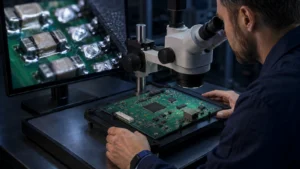
Use a practical PCBA first article checklist to verify released revisions, components, placement, hidden joints, programming and test results before approving repeat production.
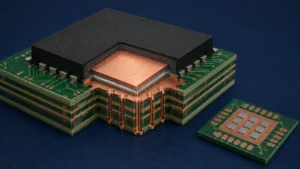
Coordinate the QFN land pattern, exposed pad, thermal vias and stencil strategy. Review solder wicking, component float, perimeter joints and inspection limits before assembly.
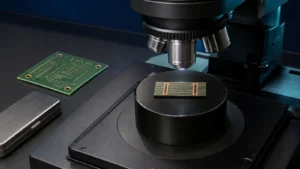
Define the required PCB and PCBA quality level without confusing fabrication, soldering and assembly acceptance. Covers selection, documentation and quotation requirements.
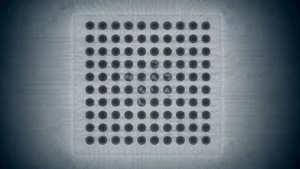
Evaluate BGA solder-joint voids by their size, location, distribution and applicable requirements. Review paste, stencil, reflow and X-ray evidence before choosing corrective actions.
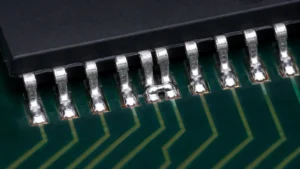
Trace unintended solder connections to printing, placement, board geometry or process conditions, then verify a controlled correction before the next assembly run.
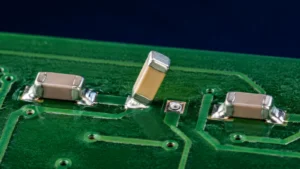
Understand why two-terminal SMT components lift during reflow and use a structured workflow to distinguish design, printing, placement and material contributors.
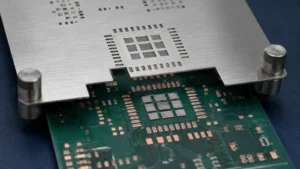
A practical stencil review covering thickness, aperture geometry, paste release and mixed-component requirements, with the inputs needed before SMT production.
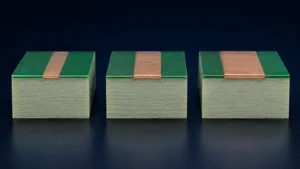
Choose PCB copper by layer with a clear view of conductor geometry, finished thickness, via transitions and manufacturing constraints. Includes a practical review checklist.
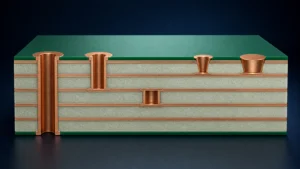
A manufacturing-focused comparison of through, blind, buried and microvia structures, with via-in-pad considerations and the inputs needed to review a multilayer interconnect.
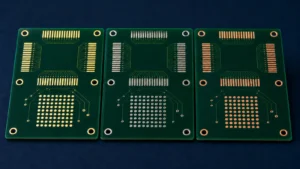
Select a PCB surface finish around soldering, pad flatness, storage, RF, contacts and wire bonding rather than assuming one finish is best for every board.